
01/Coverage
Score coverage against real scenarios.
Measure how much of your scenario space a dataset actually exercises, and where the gaps are, so you find the missing case before it finds you.
Validate scores a Physical AI dataset against the scenarios that matter, then produces the signed, immutable evidence behind it: the coverage, the scoring, and the audit trail your customers and regulators now ask to see.
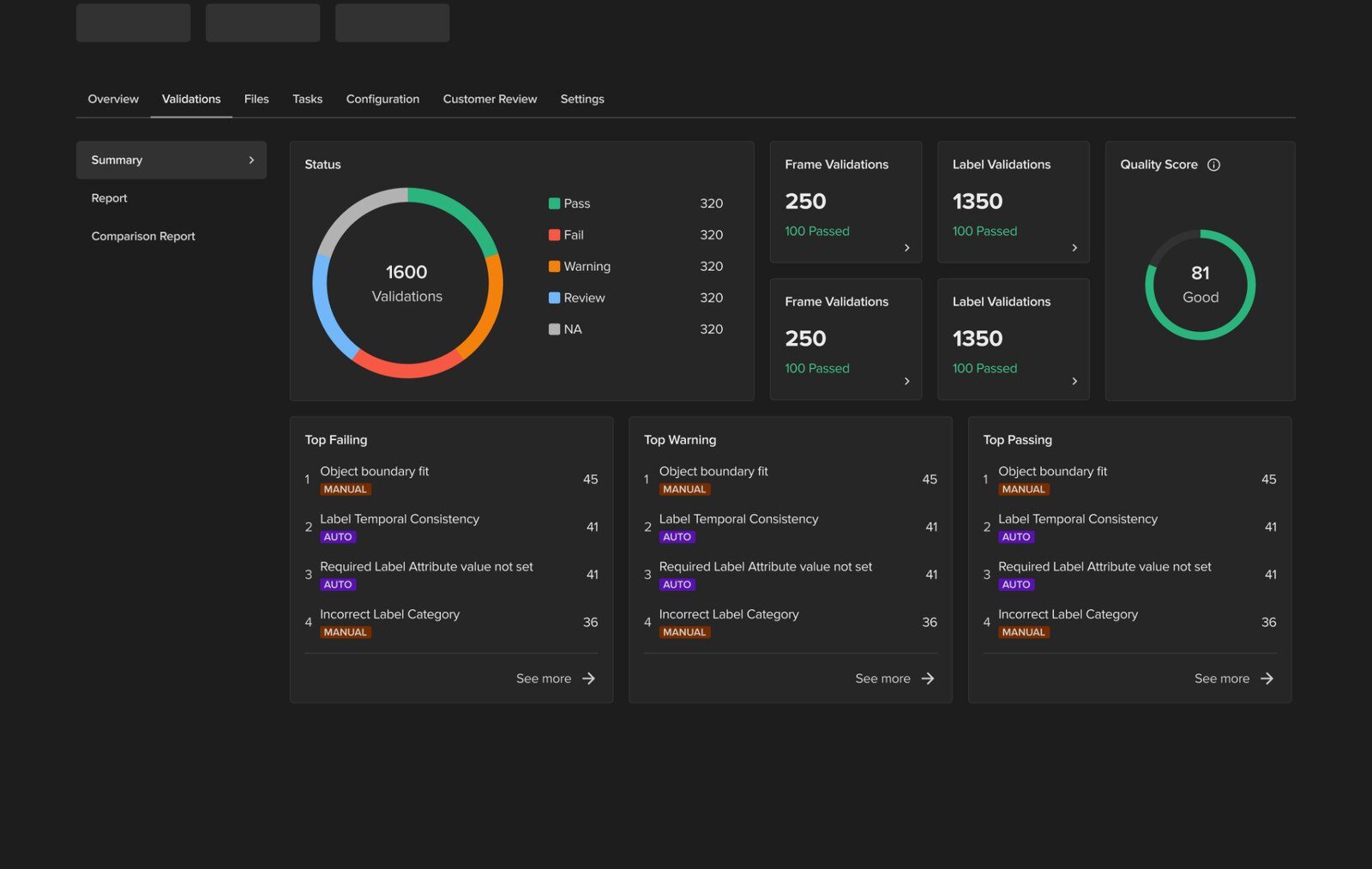
A model can ace its test set and still fail the one case that ends up in an incident report. Before a system ships, you have to show, not assert, that it was checked against the scenarios that decide whether it's safe. Validate turns that from a slide into evidence.
Five jobs, on whatever data you bring: vendor, in-house, or auto-labeled.
Measure how much of your scenario space a dataset actually exercises, and where the gaps are, so you find the missing case before it finds you.
Your taxonomies and quality checks run across every frame: minimum labels, boundary fit, missing segmentation, attribute completeness, in seconds, not weeks.
Put review against final, vendor against vendor, or model against verified data, scored on matching rate, category agreement, and IoU. Evidence, not opinion.
Automation ranks the riskiest frames first. Human review lands on those, so experts spend their time on the frames that need judgment, not on frames that were already fine.
Every check, score, and correction is recorded and signed. When a regulator asks how you know, you hand over the record instead of rebuilding it.
The same tools your team works in, from rule checks to frame-by-frame comparison.
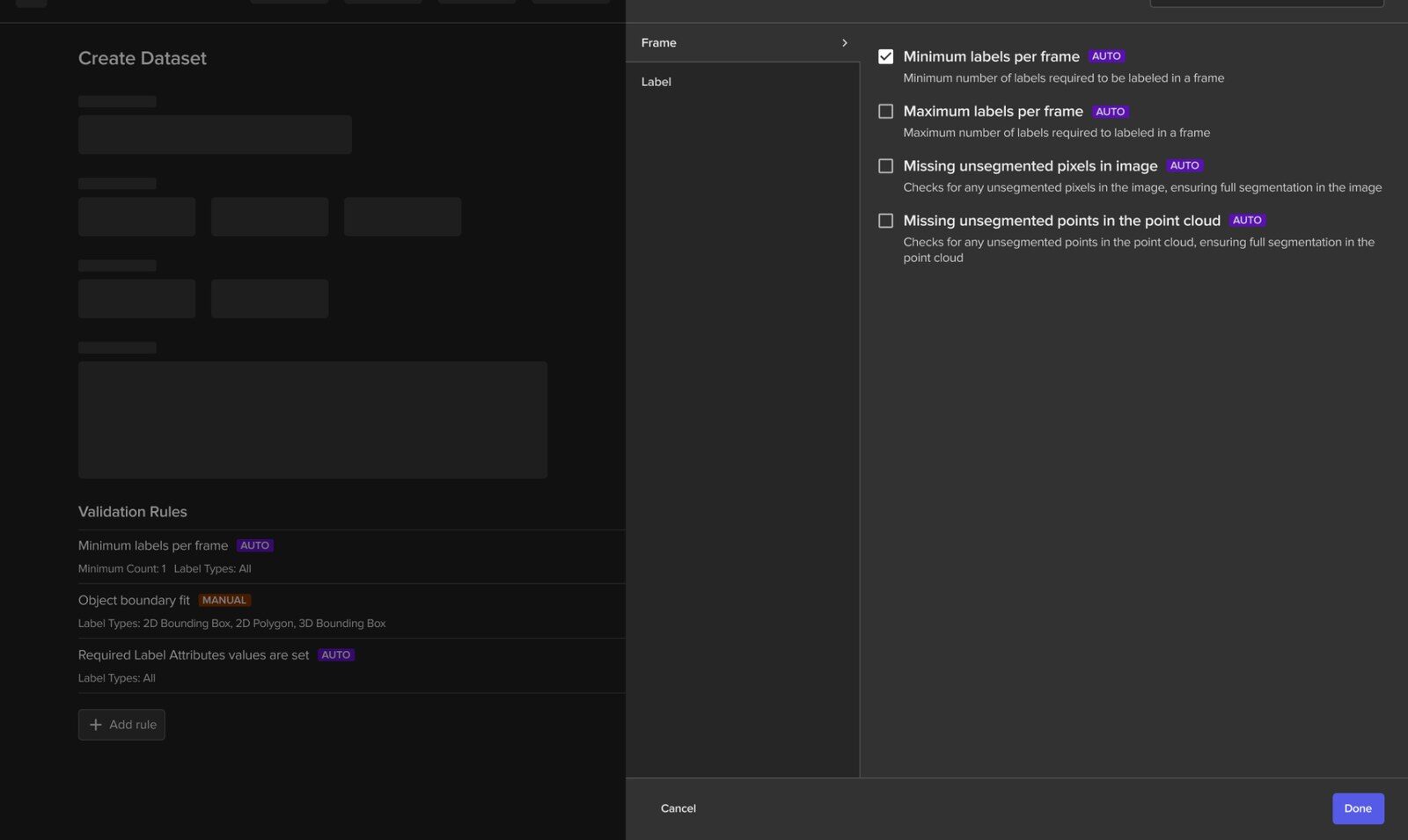
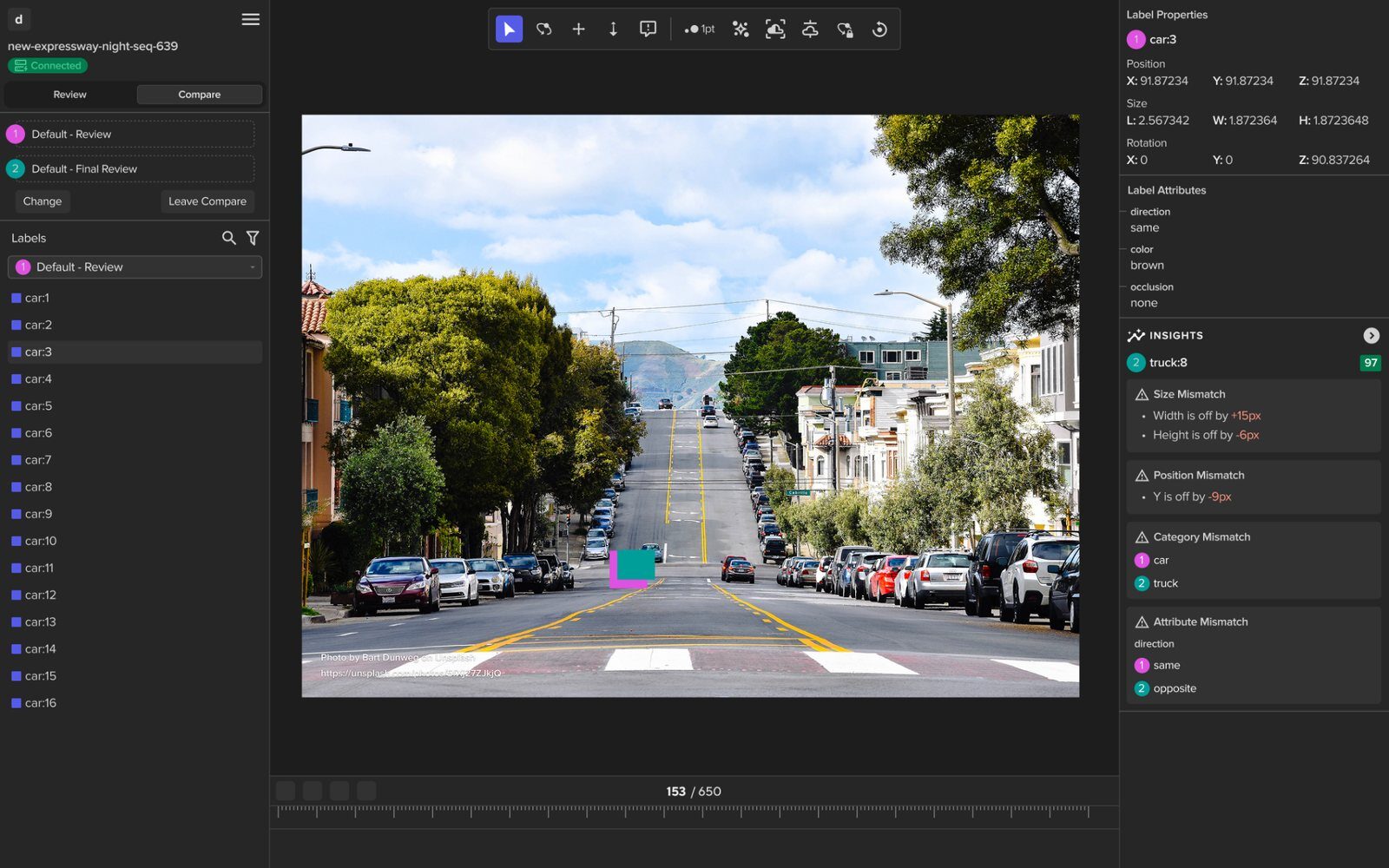
Coverage and scoring are only half of it. The other half is the trail that holds up when someone checks your work.
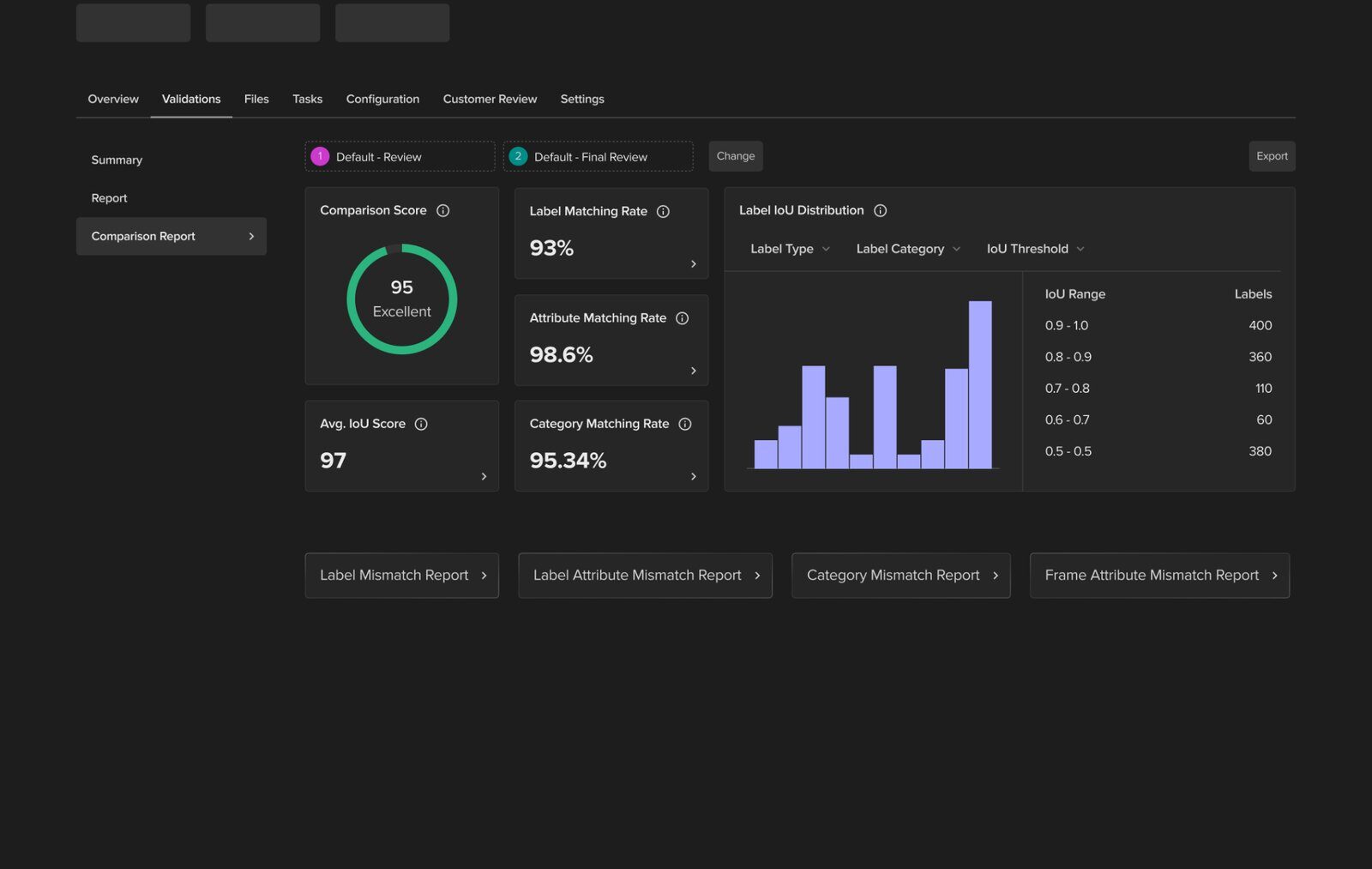
Every validation produces a report you can act on and a record you can defend: comparison scores, matching rates, IoU distribution, and downloadable mismatch breakdowns, tied to the exact frames they came from.
That evidence is built to map onto the standards your domain runs on, from ASAM OpenLABEL and Safety Pool™ scenario coverage to the documentation the EU AI Act and Euro NCAP now expect. Handled under SOC 2 Type II, ISO 27001, and TISAX.
Walk through a real audit trail→A read-only health check: rank the riskiest labels and score quality without touching the data, so you know exactly where a set stands before you commit to fixing it.
Check external labels against your rules, correct what's wrong, and compare original to corrected side by side, so you verify before you pay or train, not after.
Score a release candidate against your scenario set and export the signed evidence your safety case needs, in the format your reviewers already read.
Talk to us to walk through a real audit trail, or read the full documentation at help.deepen.ai.
Bring a dataset. We'll score it, surface the gaps, and show you the evidence trail it produces.